The Interstate Highway System: The Critics Saw Cost and Disruption. America Built the Logistics Economy.

Initial Investment:
$25 billion under the Federal-Aid Highway Act of 1956 (approximately $300 billion in 2026 dollars).
Estimated Return on Investment:
Immeasurable. Conservatively, more than $100 trillion in economic activity enabled over the past seven decades.
In our journey looking at the 11 of the greatest American investments that many people hated, we go back 70 years to when President Dwight D. Eisenhower proposed a bold plan to connect every part of the United States with a massive highway system.
On June 29, 1956, he signed the Federal-Aid Highway Act into law.
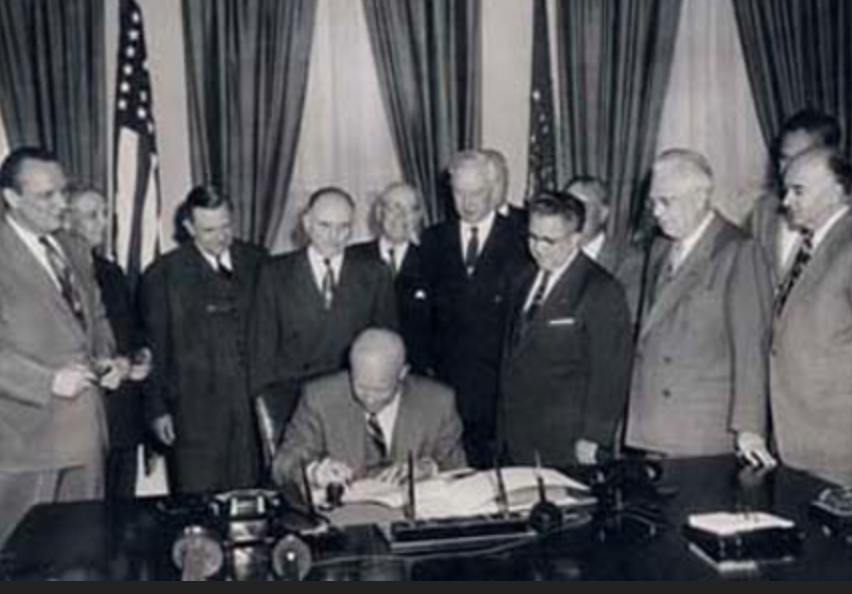
At the time, few people appreciated that they were witnessing the beginning of one of the greatest infrastructure projects in American history.
The legislation authorized the construction of approximately 41,000 miles of interstate highways that would eventually connect nearly every major metropolitan area in the country.
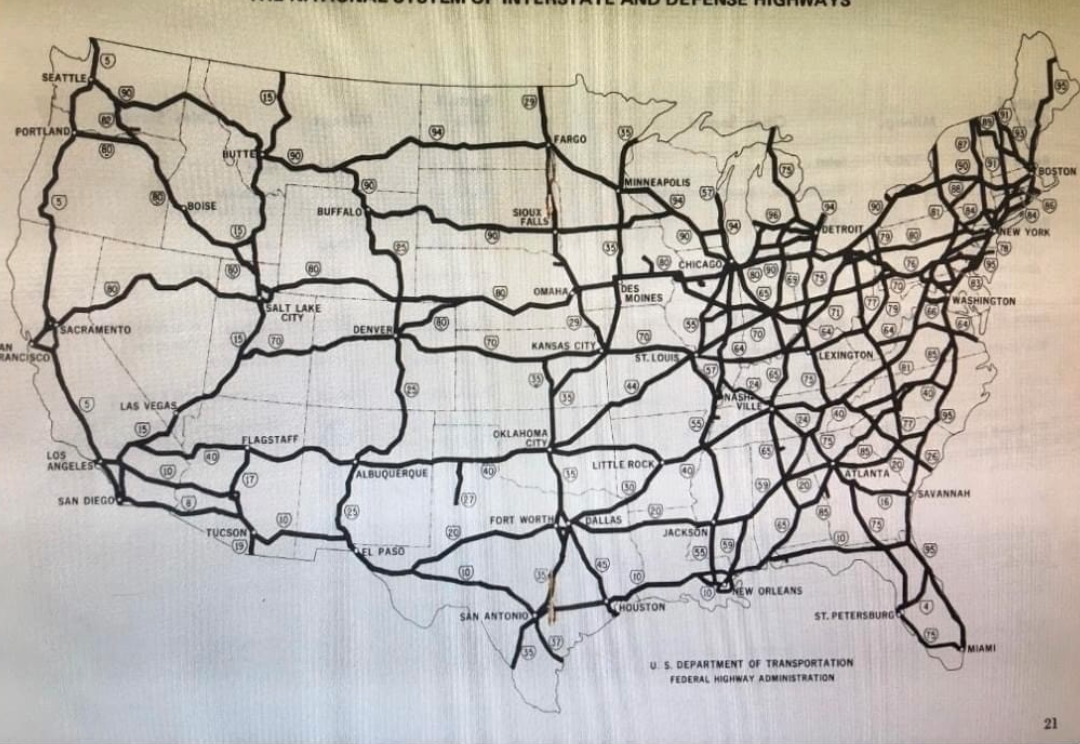
The price tag was staggering for its time. Twenty-five billion dollars was an almost unimaginable sum in the mid-1950s, and the project would ultimately cost far more than initially estimated.
Not everyone was enthusiastic.
Critics questioned whether the nation needed such an expansive highway network. Others argued the cost was excessive and worried taxpayers would be burdened for generations. Some feared the highways would destroy communities, encourage urban sprawl, and permanently alter the American landscape.
The opposition’s battle cry was “Kill the Bill!”
But they eventually lost.
As construction began, opposition intensified in many cities.
Entire neighborhoods were displaced. Businesses were demolished. Land had to be acquired on a massive scale. To many Americans, the interstate system looked like a disruptive, expensive, and unnecessary public works project.
History would prove otherwise.
The interstate highway system became one of the most important economic platforms ever built.
Shipping costs fell.
Travel times collapsed.
Regional economies became national economies.
A manufacturer in Ohio could reach customers in Texas. Agricultural products moved quickly to distant markets. Tourism exploded. The trucking industry became the backbone of American commerce. Distribution centers, suburbs, retail chains, and entirely new business models emerged because goods and people could move across the country with unprecedented speed and efficiency.
The modern logistics economy was born.
You see, it is difficult to imagine the United States without the interstate system because nearly every aspect of modern life has been shaped by it.
Amazon’s fulfillment network depends on it.
The trucking industry depends on it.
Modern supply chains depend on it.
Tourism depends on it.
National retail chains depend on it.
Emergency response and military logistics depend on it.
The Best Free Investment You’ll Ever Make
Join Wealth Daily today for FREE. We’ll keep you on top of all the hottest investment ideas before they
hit Wall Street. Become a member today, and get our latest free report: “The $10 Trillion AI Infrastructure Boom.”
It contains full details on why money managers are overpaid and provides you with
tools for growing your wealth.On your own terms. No fees, no commission.
In fact, here’s a fun fact about the interstate highway: For every 5 miles, 1 mile has to be straight?
Any guess as to why?
So that one 1 mile of straight highway can serve as a landing strip for airplanes!
The interstate system didn’t simply make transportation easier.
It fundamentally changed where Americans lived, worked, invested, and built businesses.
Trying to calculate the return on investment becomes almost impossible.
The economic activity enabled by the interstate highway system almost certainly exceeds $100 trillion. The gains in productivity, efficiency, and commerce have compounded for 70 years and continue to compound today.
And that’s the lesson investors should remember.
The interstate system was not valuable because of the concrete itself.
Its value came from what the concrete made possible.
That’s an important distinction.
President Eisenhower wasn’t simply building roads.
He was building a platform that would lower transportation costs, connect markets, and create opportunities that didn’t yet exist.
Every transformational investment works this way.
The infrastructure comes first.
The innovation follows.
You see, that’s exactly why I believe the current opposition to AI data centers is so misguided.
The critics look at artificial intelligence and see giant buildings consuming enormous amounts of electricity. They see cooling systems, substations, transmission lines, and massive capital expenditures. They wonder why society needs so much infrastructure for a technology that is still in its early stages.
But people asked similar questions in the 1950s.
Why build tens of thousands of miles of highways?
Why spend billions of dollars connecting places that seemed too distant and too sparsely populated?
Why construct infrastructure that appeared far larger than immediate demand required?
The answer, of course, is that the infrastructure wasn’t built solely for the present.
It was built for the future.
Artificial intelligence demands a similar level of vision.
The data centers being constructed today are not simply supporting chatbots and image generators. They are becoming the digital highways upon which future industries will travel. They will support scientific discovery, autonomous systems, robotics, medicine, defense, manufacturing, financial services, and innovations that we cannot yet fully imagine.
The interstate system allowed goods to move efficiently across the country.
AI infrastructure will allow intelligence to move efficiently across the economy.
That’s a profound shift.
In the 20th century, fortunes were made by reducing the cost of moving physical things.
In the 21st century, fortunes may be made by reducing the cost of creating and applying intelligence itself.
You see, the similarities are almost impossible to ignore.
Both required enormous upfront investments. Both generated fierce criticism. Both appeared too large and too expensive for their time. Both were accused of solving problems that didn’t yet exist.
And both became foundational platforms upon which entirely new industries were built.
Nobody standing beside a newly paved interstate in 1956 could have imagined overnight package delivery, e-commerce, or the modern distribution economy.
Likewise, nobody standing outside a hyperscale data center today can fully envision the industries that artificial intelligence will create over the next several decades.
The critics of the interstate highway system saw cost and disruption.
The builders saw a connected nation. The critics saw concrete and bulldozers.
America gained the logistics platform that powered decades of prosperity.
And today, the critics of artificial intelligence see power-hungry data centers and billions of dollars in infrastructure spending.
I see the digital highways of the intelligence economy being built before our eyes.
History has a remarkable habit of rewarding those who recognize foundational infrastructure while everyone else is still arguing about the price tag.
Get to the good, green grass first…
The Prophet of Profit,

Brian Hicks
 Check us out on YouTube!
Brian is a founding member and President of Angel Publishing. He writes about general investment strategies for Wealth Daily and Energy and Capital. Brian is the managing editor and investment director of R.I.C.H Report (Retired Independent Carefree Healthy), New World Assets and Extreme Opportunities. For more on Brian, take a look at his editor’s page.
The Best Free Investment You'll Ever Make
We never spam! View our Privacy Policy
After getting your report, you’ll begin receiving the Wealth Daily e-Letter, delivered to your inbox daily.
Angel Publishing Investor Club Discord - Chat Now
Brian Hicks Premium
Introductory

Advanced


